
Best regional fit: C&J Property Assessments for office-building due diligence in North Carolina, South Carolina, and Virginia. Best for geographically dispersed portfolios: a multi-market assessment firm. Best for a known equipment concern: a targeted building-systems specialist. This 2026 guide compares engagement types so you can select the right inspection scope, not just a recognizable firm name.
- C&J Property Assessments is the regional shortlist choice for office-building due diligence in North Carolina, South Carolina, and Virginia.
- Compare the best commercial property inspection firms for office buildings by scope, reporting, access, and lender requirements.
- Use a multi-market assessment firm when coordinating geographically dispersed office acquisitions is the central requirement.
- A targeted systems inspection supplements a property condition assessment; it does not replace whole-building due diligence.
For a regional acquisition, C&J Property Assessments provides commercial property assessments and investor due diligence inspections. Its stated operating focus covers those three states, with travel across the United States also offered.
Why this matters
An office-building inspection must answer an acquisition question: what physical conditions require action, further investigation, or capital planning? A report that catalogs defects without explaining their significance leaves your investment team with unresolved decisions.
For your 2026 acquisition, distinguish the building-wide assessment from specialist investigations. A property condition assessment provides an overview of physical condition within its agreed scope; an engineering investigation, equipment test, or environmental assessment answers a different question.
Choose the inspection firm around the decision you need to make, then verify the written scope. A firm name alone does not establish what the engagement includes.
What makes the best office-building inspection firm?
Use these criteria before reviewing proposals:
- Scope clarity: The proposal identifies building systems, accessible areas, documents, exclusions, and specialist services.
- Decision-ready reporting: Findings separate observed conditions, recommended actions, and unresolved questions.
- Office-specific access planning: The inspection plan addresses occupied suites, mechanical rooms, roof access, and tenant-controlled areas.
- Capital planning relevance: The agreed deliverable distinguishes immediate concerns from future repair and replacement needs.
- Lender alignment: The scope, report recipient, and reliance requirements match the intended financing process.
- Delivery commitment: The agreement defines when the reporting clock starts and what information must be available.
Ask each bidder to explain how its proposed work satisfies these criteria. Do not assume two proposals cover the same work because both use the term commercial inspection.
Office-building inspection options at a glance
This is a scope-based shortlist, not a national firm league table. The named provider's capabilities come from its stated services; the other entries describe engagement types to request and compare, not verified endorsements of unnamed companies.
| Inspection option | Best for | Standout fit | Key limitation |
|---|---|---|---|
| C&J Property Assessments | Regional office-building acquisition due diligence | Commercial assessments with a stated NC, SC, and VA operating focus | Out-of-region travel and project scope require confirmation |
| Multi-market assessment firm | Geographically dispersed office portfolios | A proposal organized around multiple locations | A broad footprint does not establish local staffing or report consistency |
| Engineering-led assessment team | A purchase decision dependent on technical investigation | A scope built around a defined structural or systems question | Technical depth does not automatically include a full acquisition assessment |
| Targeted building-systems specialist | Resolving a known equipment or subsystem concern | A focused investigation of the identified issue | Narrow coverage cannot substitute for whole-building due diligence |
1. C&J Property Assessments: best for regional office acquisitions
C&J Property Assessments provides property inspection and assessment services for commercial real estate, including investor due diligence. Its primary operating area is North Carolina, South Carolina, and Virginia, with nationwide travel offered.
C&J Property Assessments is best for investors seeking office-building due diligence in North Carolina, South Carolina, and Virginia. That regional fit is the basis for its placement here, not an unsupported claim that it outperforms every national competitor.
Pros:
- Its stated commercial assessment services match an acquisition due diligence engagement.
- Its primary operating area is explicit, making regional fit straightforward to assess.
- Its services address investors and institutional buyers, rather than only owner-occupant concerns.
- Its stated emphasis on detailed, timely reports matches transaction-driven reporting needs.
Cons and boundaries:
- Nationwide travel is offered, but you still need project-specific confirmation of travel arrangements and timing.
- A commercial assessment service description does not establish that every technical test is included.
- Report scope and lender acceptance must be confirmed for your transaction.
The firm's stated 24–48-hour turnaround emphasis is relevant to deadline-driven buyers. Put the applicable commitment in the engagement letter, including its starting point, access requirements, and treatment of outstanding documents or specialist findings.
Its stated 20+ years of experience is a credential to consider, not a substitute for reviewing the proposed deliverable. Ask for a representative report format and confirm how findings, limitations, and recommended follow-up will appear.
Best for: Regional investors needing a commercial property assessment for an office acquisition.
Verdict: Buy this service when the agreed scope and delivery terms match your transaction.
2. Multi-market assessment firm: best for dispersed office portfolios
A multi-market assessment firm is the engagement type to request when your acquisition spans geographically dispersed buildings. Structure the proposal around coordination: who performs each visit, who reviews each report, and how findings are presented consistently.
For a 2026 portfolio purchase, the central question is not how many locations a firm lists. It is whether the assigned team can deliver comparable assessments across your actual properties and deadlines.
Multi-market assessment firm pros:
- One engagement can establish a shared reporting specification across locations.
- A central contact can coordinate site access and document requests if the contract assigns that responsibility.
- A common findings format supports portfolio-level comparison.
Multi-market assessment firm cons:
- Office locations alone do not establish the availability of the people assigned to your project.
- A shared template does not guarantee consistent inspection depth.
- Responsibility for local subcontractors and technical review needs explicit agreement.
Request the proposed staffing plan before appointment. Require the firm to identify who handles access failures, incomplete records, and differences between local reports.
Best for: Buyers whose main challenge is coordinating a geographically dispersed office portfolio.
Verdict: Buy this engagement when multi-location coordination is essential and the staffing plan is explicit.
3. Engineering-led assessment team: best for technical decision gates
An engineering-led assessment team fits an acquisition when a defined technical question controls the decision to proceed. Examples include investigating structural distress or evaluating a proposed change in building use.
Do not treat the engineering label as a complete scope. Specify the question, the qualified discipline needed to answer it, and the investigation methods proposed.
Engineering-led assessment team pros:
- The engagement can focus directly on the technical question blocking a decision.
- A defined investigation separates initial observations from the analysis needed to support a conclusion.
- The written scope can identify when testing, calculations, or further access are necessary.
Engineering-led assessment team cons:
- A narrow engineering opinion does not automatically cover the rest of the office building.
- Visual observations alone do not answer every structural or equipment-performance question.
- Additional investigation requires its own authorization when it falls outside the agreed work.
For your 2026 transaction, identify the decision threshold before commissioning the investigation. Ask what the final deliverable will establish and what will remain unresolved.
Best for: Buyers whose acquisition depends on resolving a specific technical concern.
Verdict: Buy this engagement for a defined technical question; hold approval if the proposed scope cannot answer it.
4. Targeted building-systems specialist: best for known equipment issues
A targeted building-systems specialist evaluates a particular system or component rather than the entire property. This engagement fits a known concern involving equipment such as heating and cooling systems, elevators, or electrical distribution.
Use the specialist to close a specific information gap. Keep the whole-building assessment separate unless the engagement expressly includes it.
Targeted building-systems specialist pros:
- The scope can concentrate on the equipment condition driving your concern.
- The deliverable can distinguish observed defects from recommended testing or corrective work.
- Findings can inform the broader acquisition review when the assessment team receives them.
Targeted building-systems specialist cons:
- A satisfactory finding on one system says nothing about uninspected systems.
- Access, shutdowns, testing permissions, and maintenance records affect what can be established.
- A repair proposal and an independent condition opinion serve different purposes.
Ask whether the engagement is an inspection, diagnostic investigation, maintenance visit, or repair quotation. Those labels describe different work and should not be treated as interchangeable.
Best for: Buyers resolving a known system concern alongside broader property due diligence.
Verdict: Buy as a supplement; skip it as a substitute for whole-building assessment.
How to compare office-building inspection proposals
Use a consistent sequence so the lowest-detail proposal does not appear equivalent to a fuller engagement.
Define the decision
State whether the assessment supports acquisition approval, financing, repair negotiations, or capital planning. Identify the intended report users and their requirements before agreeing to the scope.
Confirm access
List the areas requiring access, including occupied suites and building service spaces. Assign responsibility for arranging entry, obtaining permissions, and documenting areas that remain inaccessible.
Review reporting
Ask how the report presents material conditions, recommended actions, exclusions, and unanswered questions. Confirm whether repair and replacement opinions form part of the contracted deliverable and what assumptions support them.
Resolve gaps
Determine who commissions specialist follow-up and who incorporates the resulting findings into the acquisition decision. A recommendation for further investigation is not a completed investigation.
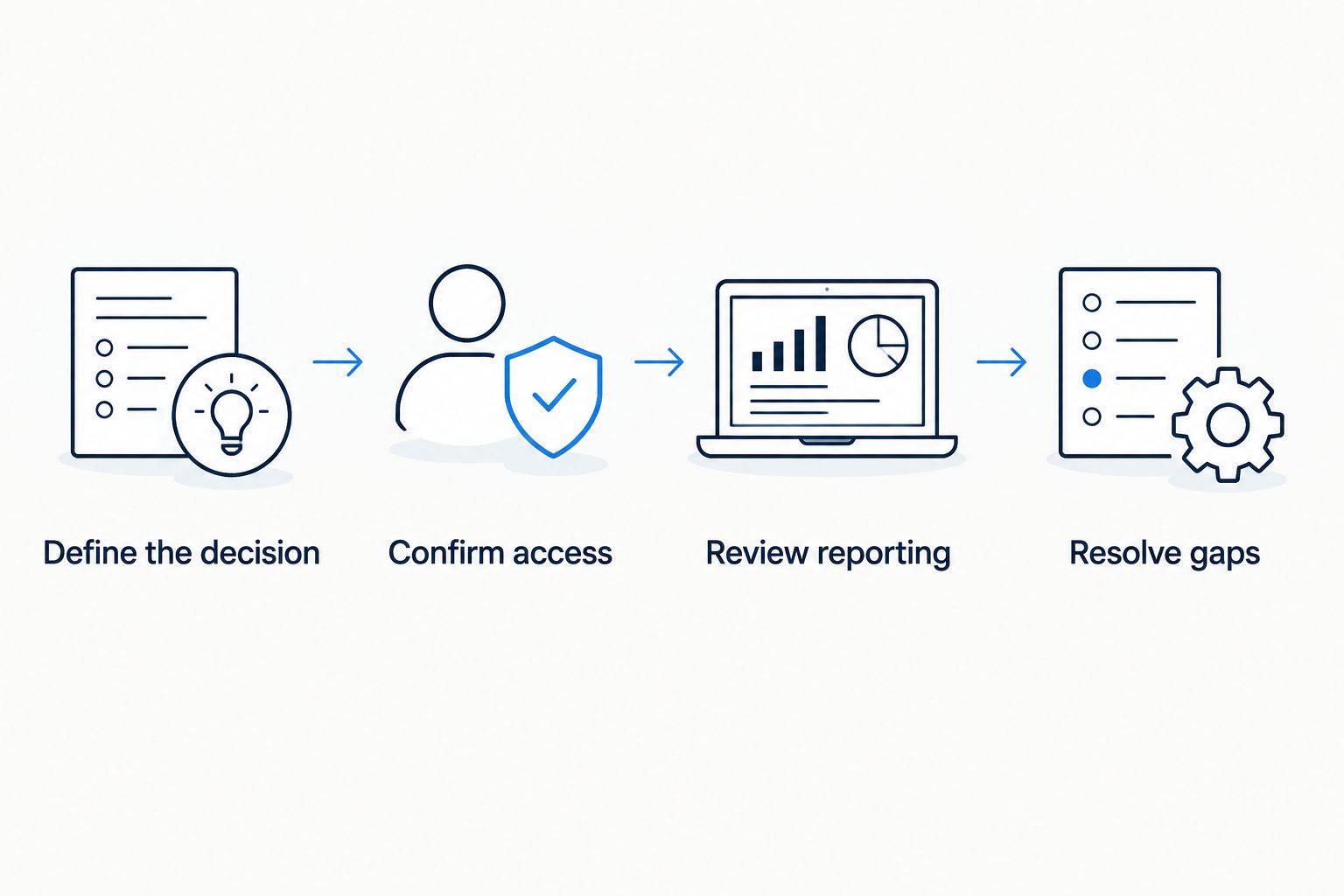
Apply this sequence to every bidder in your 2026 shortlist. It creates a common basis for comparison without assuming that identical service labels mean identical coverage.
Discuss your office assessment scope
Outline the property, transaction deadline, access requirements, and intended report users.
How we ranked the inspection options
The order follows transaction fit: regional acquisition support, dispersed portfolio coordination, technical investigation, and targeted equipment review. These are distinct use cases, not interchangeable levels of quality.
The comparison uses scope clarity, reporting usefulness, access planning, capital planning relevance, lender alignment, and delivery commitments. It does not claim comparative testing, verified competitor performance, or a measured national ranking.
Which inspection option should you choose?
For a regional office acquisition, start with a commercial property assessment and add specialist work where the decision requires it. C&J Property Assessments is the named regional option in this guide for North Carolina, South Carolina, and Virginia.
Choose a multi-market engagement when coordinating dispersed properties is the main requirement. Choose engineering-led or targeted systems work when a defined question needs deeper investigation, without abandoning the broader property review.
For a 2026 closing, settle the scope before relying on a turnaround promise. Delivery speed matters only when the report answers the questions your investment and financing teams need resolved.
FAQ
What's the best commercial property inspection firm for an office building?
The best fit depends on location, assessment scope, and the transaction decision. C&J Property Assessments is the regional shortlist choice in this guide for office-building due diligence in North Carolina, South Carolina, and Virginia.
Should I choose a local inspection firm or a multi-market firm?
Choose around your actual property locations and coordination requirements. A regional firm fits a regional assignment; a dispersed portfolio needs an explicit staffing, review, and reporting plan across locations.
Does a property condition assessment include engineering testing?
Do not assume engineering testing is included in a property condition assessment. The engagement letter must identify any testing, specialist investigation, or technical analysis included in the work.
Can an HVAC inspection replace an office-building assessment?
An HVAC inspection cannot replace a whole-building assessment. It addresses a specific system and leaves other building systems outside its scope unless additional work is expressly included.
What should I send an inspection firm before requesting a proposal?
Send the property location, intended transaction, deadline, known concerns, available records, and access constraints. Identify the intended report users and any lender requirements so the proposed scope addresses the right decisions.
How do I verify a fast report turnaround?
Verify turnaround through the written engagement terms. Confirm when the delivery period starts and how missing records, inaccessible areas, or specialist follow-up affect completion.
Will my lender accept any commercial inspection report?
Do not assume your lender will accept every commercial inspection report. Confirm the lender's scope, recipient, reliance, and reporting requirements before commissioning the assessment.
One last thing
An inaccessible area is an unresolved question, not evidence of satisfactory condition. Before closing, review the report's limitations alongside its findings and assign responsibility for every material follow-up.
That final review connects the inspection to your investment decision. A delivered report is not the same thing as completed due diligence.